Box sizes
Small vs Medium vs Large Moving Boxes
Understand which moving box size to use for books, dishes, bedding, decor, lamps, pantry goods, clothing, toys, and fragile items.
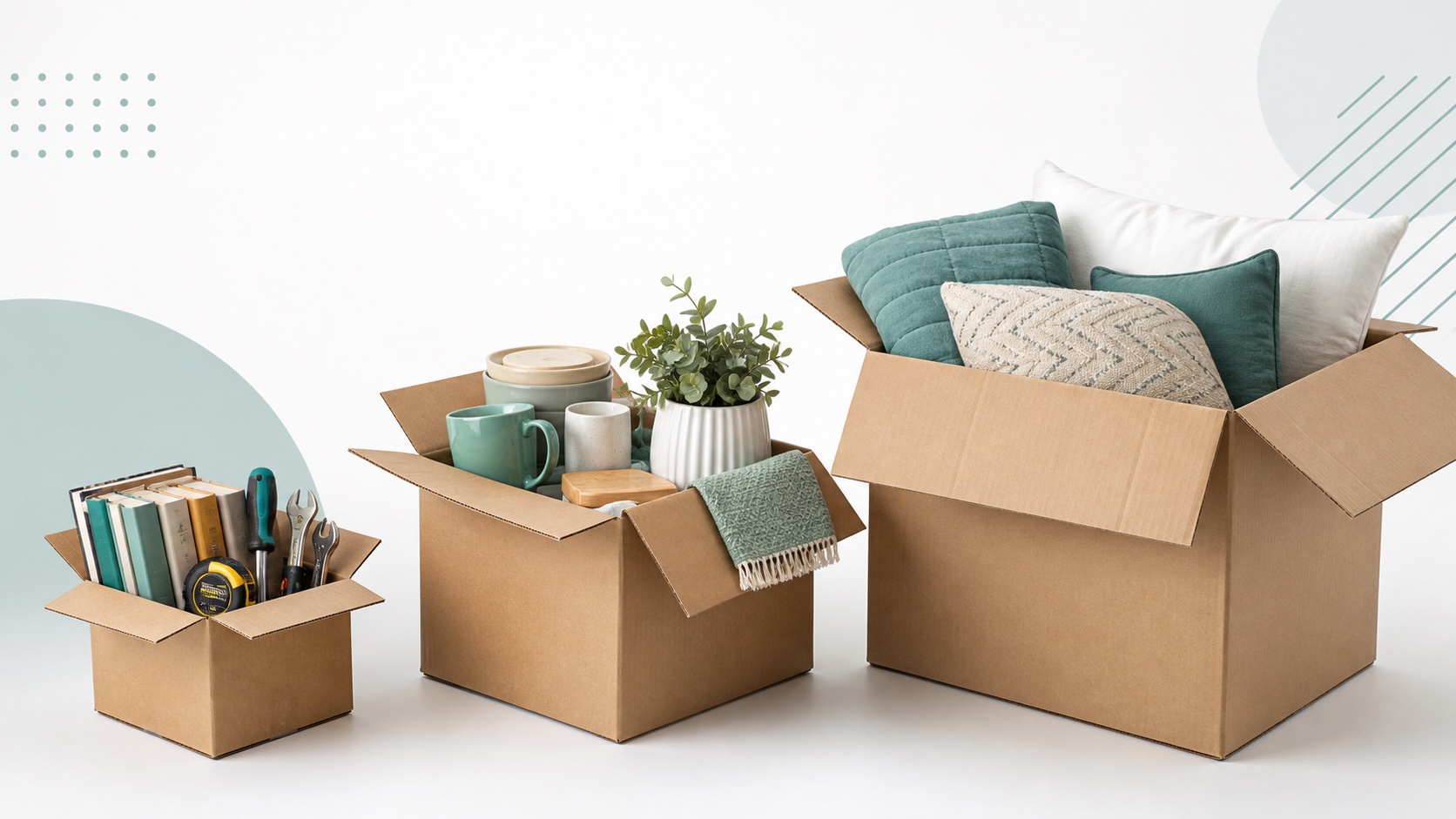
Choose by weight before volume
The box that looks most efficient is not always the box you should use. Large boxes hold a lot, but they become unsafe if filled with books, pantry cans, tools, or dishes. Small boxes are not just for small items; they are for dense items. Medium boxes are the workhorse for most household goods. Large boxes are for light, bulky things.
A useful box plan balances liftability, protection, and unpacking. If one box is hard to carry across the room, it will be worse on stairs, ramps, and moving day.
What each box size is best for
| Box size | Best for | Avoid packing |
|---|---|---|
| Small | Books, canned goods, tools, records, files, bathroom bottles, heavy decor. | Pillows, bedding, lampshades, bulky light items. |
| Medium | Kitchen goods, toys, decor, folded clothing, small appliances, office supplies. | Too many books or dense pantry goods in one box. |
| Large | Bedding, pillows, towels, light seasonal decor, lampshades, soft goods. | Books, dishes, tools, dense electronics, canned goods. |
| Wardrobe | Hanging garments, formalwear, coats, delicate clothing. | Folded casual clothes that can travel in luggage. |
| Dish | Plates, bowls, glassware, mugs, ceramics, fragile kitchen pieces. | Heavy pantry goods mixed with fragile items. |
How to split mixed rooms
Most rooms need more than one size. A living room may use small boxes for books and remotes, medium boxes for decor and media, and large boxes for throw pillows. A bedroom may use medium boxes for folded clothes, small boxes for bedside items, and wardrobe boxes for hanging clothes. A kitchen may use small boxes for pantry goods and dish boxes for glassware.
When in doubt, split by weight. If a category feels dense in your hands, it belongs in a smaller box or should be spread across multiple boxes.
Practical weight test
After packing the first few boxes, lift each one from the bottom and carry it ten steps. If it feels awkward, heavy, or likely to fail, repack before you tape the rest of the room the same way. This early test prevents a whole stack of boxes from being packed with the wrong size pattern.
Box size rules worth keeping
- Use small boxes for dense items even if the items are not physically small.
- Reserve large boxes for light goods only.
- Use dish boxes when fragility matters more than speed.
- Leave headroom for cushion material in fragile boxes.
- Do not mix heavy bottom layers with fragile top layers unless the box is built for it.
Estimate your own box mix
Use the calculator to turn this guide into a printable box list with a low, normal, and high range for your home.
Open moving box calculator