Supplies
Packing Paper vs Bubble Wrap
When to use packing paper, bubble wrap, towels, and other cushioning supplies for moving boxes, dishes, glassware, framed pieces, and fragile decor.
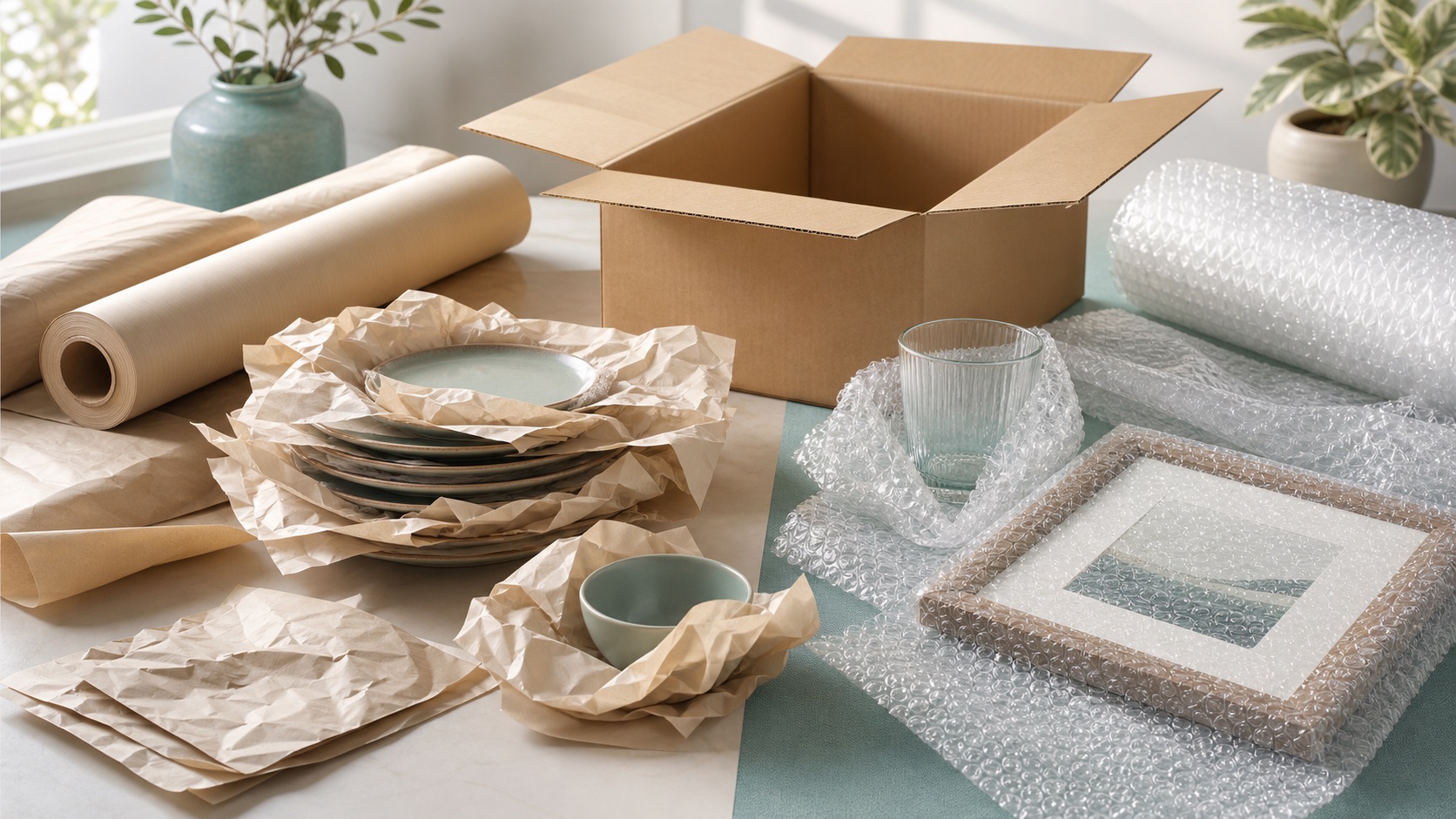
Paper and bubble wrap solve different problems
Packing paper is flexible, clean, and easy to use in large quantities. It separates surfaces, fills small voids, wraps dishes, and prevents items from rubbing together. Bubble wrap provides more impact cushion for delicate pieces, but it takes more space and should be used intentionally.
The right choice depends on the item, the box, and the risk. A stack of plates may need paper between each piece and a dish box. A framed picture may need corner protection and bubble wrap. A sturdy pot may only need paper or a towel between nested surfaces.
Supply comparison
| Material | Best use | Watch out for |
|---|---|---|
| Packing paper | Dishes, mugs, void fill, surface protection, clean wrapping. | Less impact protection for delicate or high-value items. |
| Bubble wrap | Glass, ceramics, framed pieces, fragile decor, lamp bases. | Bulky and easy to overuse where paper is enough. |
| Towels and linens | Cushioning sturdy items and filling larger gaps. | Can hide fragile items if labels are not clear. |
| Foam sleeves or corners | Frames, mirrors, electronics, sharp corners. | May not fit every item; still needs box stability. |
Use paper first for kitchens
Most kitchen packing starts with paper because kitchens have many small surfaces to separate. Plates, bowls, mugs, glassware, and pantry jars all benefit from paper. Use it to wrap individual pieces and to fill gaps at the top and sides of a box. If a piece is delicate, add bubble wrap after paper or use bubble wrap as the outer layer.
Use bubble wrap where impact matters
Bubble wrap is useful for items that are fragile, irregular, or likely to take pressure during the move. Framed art, ceramic vases, glass decor, and lamp bases often deserve it. Do not wrap everything in bubble wrap by default. It can make boxes bulky and expensive without solving the main issue, which is often movement inside the box.
A practical rule
- If the item scratches easily, use paper for surface protection.
- If the item breaks from impact, add bubble wrap or thicker cushion.
- If the box has empty space, fill the void so items cannot move.
- If the item is heavy, choose a smaller box before adding more cushion.
- If the item is valuable, pack it alone or with very similar items.
Estimate your own box mix
Use the calculator to turn this guide into a printable box list with a low, normal, and high range for your home.
Open moving box calculator