Kitchen
How to Pack Kitchen Items
Pack plates, glasses, cookware, pantry items, small appliances, and open-first kitchen supplies with the right boxes and cushioning.
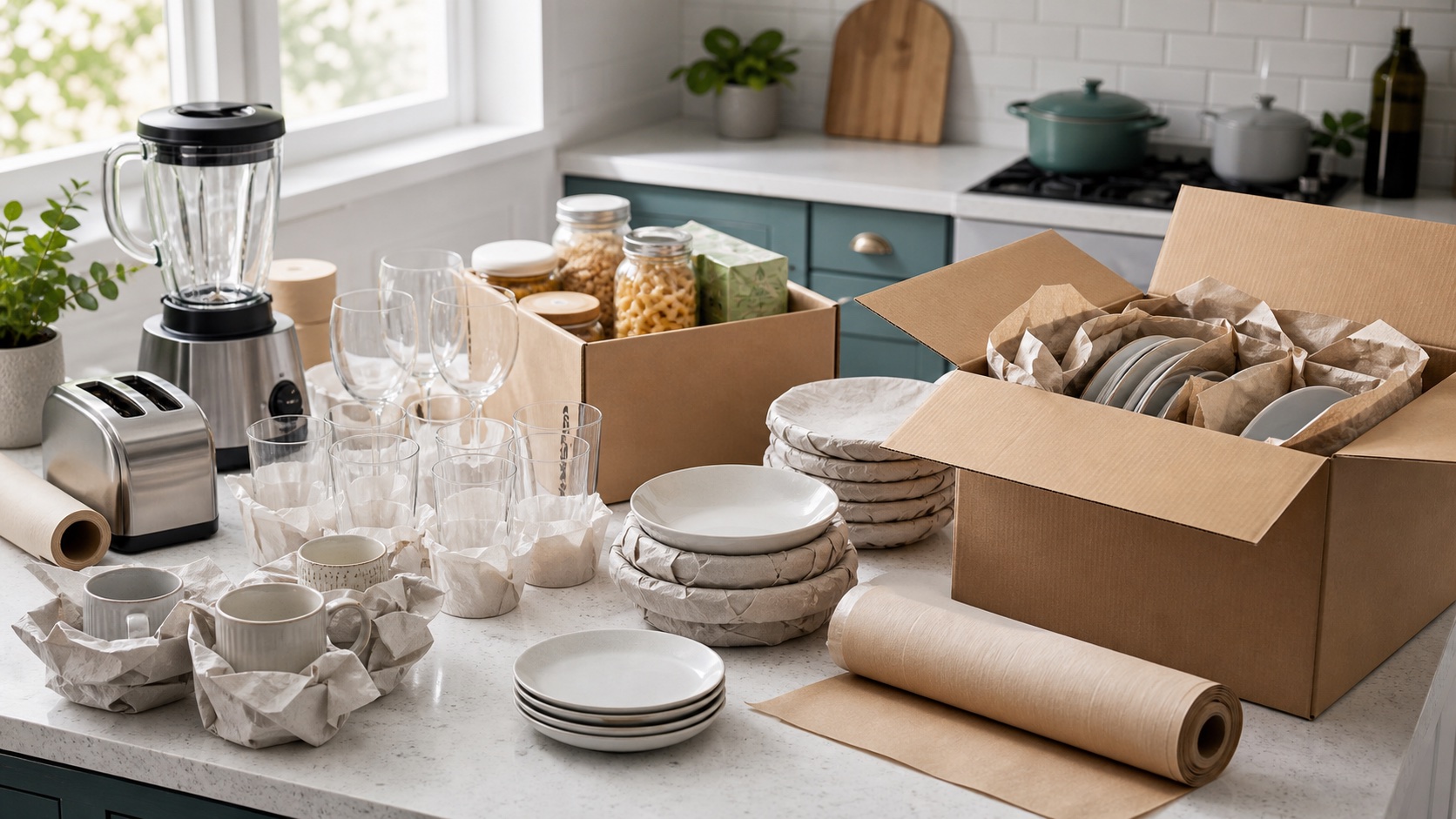
The kitchen is usually a specialty room
Kitchens create more box complexity than most rooms because they combine heavy, fragile, awkward, and daily-use items. Plates and glasses need cushion. Pantry goods are dense. Small appliances need shape support. Pots and pans are bulky but not fragile. A good kitchen plan separates these categories instead of forcing them into one kind of box.
For most apartments and homes, the kitchen increases small boxes, dish boxes, packing paper, and marker labels. It may also need one open-first box so you can make a basic meal or drink before the full kitchen is unpacked.
Kitchen item box guide
| Item group | Best box | Supply note |
|---|---|---|
| Plates and bowls | Dish box | Wrap individually or bundle with paper between pieces. |
| Glasses and mugs | Dish box or small box | Fill empty space so items cannot knock together. |
| Pantry cans and jars | Small box | Keep weight low and tape the bottom well. |
| Pots and pans | Medium box | Nest with paper or towels between surfaces. |
| Small appliances | Medium box | Remove loose parts and wrap sharp accessories. |
| Open-first kitchen basics | Small or medium box | Pack one pan, one towel, soap, mugs, and simple utensils. |
Pack in layers
Start each fragile box with a cushion layer. Add the heaviest wrapped items first, then build up with lighter pieces. Fill vertical gaps with paper so items cannot move. Do not leave a half-empty dish box because movement is what breaks kitchen items. At the same time, do not overpack until the box bulges or becomes difficult to carry.
For plates, many movers prefer packing them vertically like records rather than stacking them flat. The goal is to reduce direct pressure on broad surfaces. For mugs and glasses, wrap handles and rims carefully because those edges are vulnerable.
What to pack last
- One plate, bowl, mug, and utensil set per person if you will still be living there.
- Dish soap, sponge, towel, trash bags, and paper towels.
- One pan or pot if you plan to cook before moving day.
- Coffee or tea basics if they are part of the first morning routine.
- Snacks, pet food, medication-adjacent kitchen items, and water bottles.
Common kitchen mistakes
The biggest mistake is mixing fragile and heavy items because they happened to be in the same cabinet. Pantry jars, plates, mugs, and small appliances all need different protection. The second mistake is underbuying paper. Kitchens use more paper than almost any room. If you add the kitchen add-on in the calculator, expect packing paper and dish boxes to increase for a reason.
Estimate your own box mix
Use the calculator to turn this guide into a printable box list with a low, normal, and high range for your home.
Open moving box calculator