Fragile
How to Pack Fragile Items
A fragile item packing guide for glassware, framed art, ceramics, lamps, mirrors, dishes, and delicate decor during a household move.
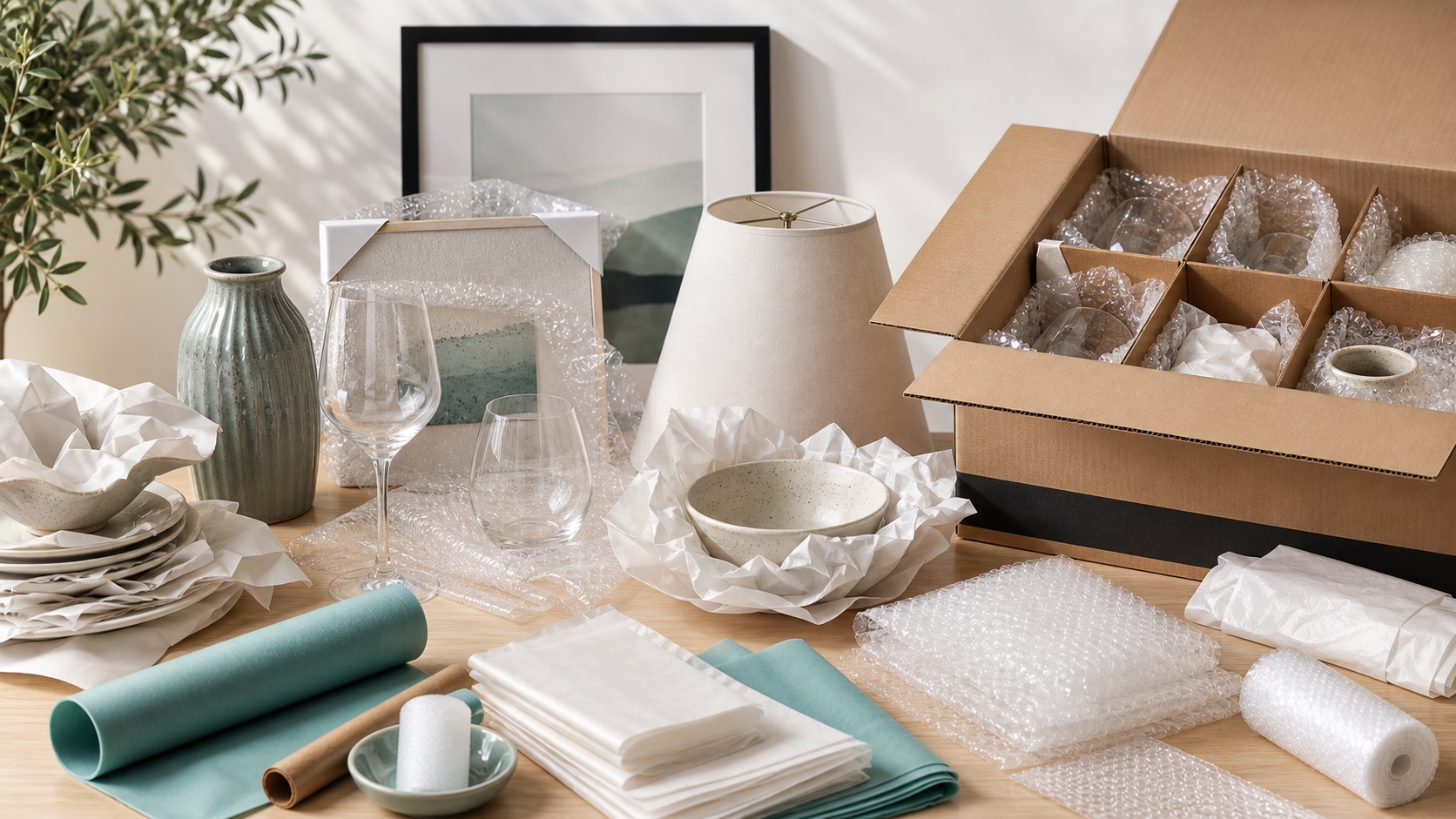
Fragile packing is about movement control
Fragile items usually break because they move, strike each other, or sit under pressure from heavier items. Good packing creates a cushion at the bottom, wraps each item, fills voids, and keeps the box from flexing. The box should feel full but not forced shut. If you hear shifting when you move the box gently, add paper or repack.
Do not treat fragile as a single category. Glassware, ceramics, framed art, lamps, mirrors, and delicate decor all need different protection. The calculator adds dish boxes and cushion supplies when fragile or kitchen add-ons are selected because these items need more than regular medium boxes.
Fragile item packing map
| Item | Recommended box | Protection |
|---|---|---|
| Glasses and mugs | Dish box or small box | Wrap individually, cushion handles and rims, fill gaps. |
| Plates and bowls | Dish box | Paper between pieces, vertical packing when possible. |
| Framed art | Picture or mirror box | Corner protection, flat surface padding, upright loading. |
| Lamps | Medium or specialty box | Remove bulbs and shades, wrap base separately. |
| Ceramics and decor | Small or dish box | Wrap each piece and avoid heavy top pressure. |
| Mirrors | Mirror box | Protect corners and keep upright when moving. |
Build a protective box
- Tape the bottom seam and cross-tape if the contents are heavy or valuable.
- Add a cushion layer before the first item goes in.
- Wrap each item separately, especially handles, rims, corners, and protruding parts.
- Place heavier wrapped items at the bottom and lighter items above.
- Fill empty space along the sides and top so nothing shifts.
- Label the box as fragile and mark the room destination.
Paper, bubble wrap, and towels each have a role
Packing paper is good for surface separation, filling gaps, and wrapping dishes. Bubble wrap is useful for higher-impact protection around delicate decor, framed pieces, and glass. Towels and linens can cushion sturdy pieces, but they should not replace proper wrapping for valuable or easily scratched items.
Do a shake test carefully
After closing the box without taping the top, move it gently side to side. You should not feel items sliding. If the contents shift, add cushion material or remove a few items and pack them separately. This small check is faster than unpacking broken glass later.
Estimate your own box mix
Use the calculator to turn this guide into a printable box list with a low, normal, and high range for your home.
Open moving box calculator