Two-bedroom planning
Moving Boxes for a Two-Bedroom Home
A two-bedroom moving box guide for couples, roommates, small families, kitchens, closets, books, toys, offices, and storage areas.
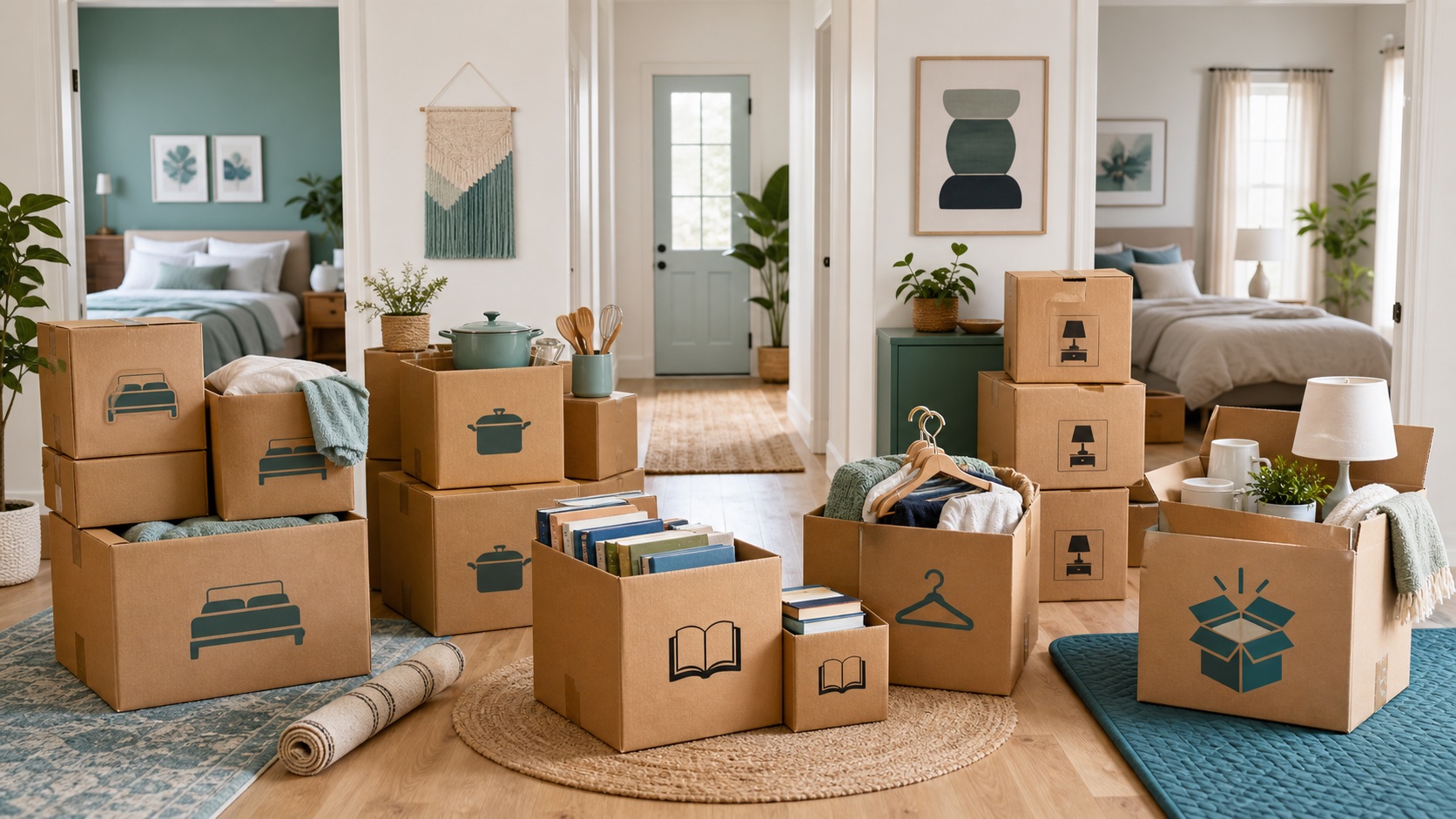
Why two-bedroom homes need room targets
A two-bedroom home can mean a couple with a guest room, two roommates, a small family, or one bedroom plus an office. Those versions do not pack the same. A moderate two-bedroom often lands around 40 to 60 total boxes, but a full household with toys, books, garage storage, and a large kitchen can move higher.
The best way to avoid underestimating is to set a small target for each room before packing. If the second bedroom is only a bed and a few linens, it may need a handful of boxes. If it is an office, nursery, hobby room, or storage room, it may need as many boxes as the main bedroom.
Two-bedroom starting mix
| Box type | Typical count | Where it goes |
|---|---|---|
| Small | 14 to 22 | Books, pantry, office, tools, bathroom, heavy decor. |
| Medium | 20 to 30 | General household goods, toys, clothes, lampshades, decor. |
| Large | 4 to 8 | Bedding, pillows, light seasonal goods. |
| Wardrobe | 1 to 3 | Hanging clothing that should not be folded. |
| Dish | 2 to 4 | Kitchen glassware, plates, fragile serving pieces. |
Room-by-room allocation
Assign boxes by destination room: kitchen, living room, primary bedroom, second bedroom, bathroom, closets, office, and storage. This helps you see whether the estimate makes sense before a single box is taped. If the kitchen has only four boxes allocated but includes pantry goods, cookware, dishes, and small appliances, the estimate is probably low.
For roommate moves, label boxes by both room and owner if needed. For family moves, mark kids boxes separately from general toys or shared storage. The labels reduce confusion on moving day and make it easier to unpack the rooms that matter first.
Where to add buffer
- Add small boxes for books, office files, pantry goods, or tools.
- Add dish boxes and paper for full kitchens with glassware and ceramics.
- Add wardrobe boxes only if hanging clothes are time-sensitive or wrinkle-sensitive.
- Add medium boxes for toys, hobby gear, and mixed decor.
- Add large boxes for bedding only if they remain light enough to lift comfortably.
Buy in phases if the estimate is high
If the calculator gives a high range, do not buy every box on day one. Start with the normal estimate, pack the storage zones and low-use rooms, then reassess. Two-bedroom homes often reveal donations, duplicate kitchen items, and forgotten closet goods during the first packing weekend. Buying in phases prevents overbuying large boxes and underbuying small ones.
Estimate your own box mix
Use the calculator to turn this guide into a printable box list with a low, normal, and high range for your home.
Open moving box calculator