Studio moves
Moving Boxes for a Studio Apartment
A studio apartment moving box guide with practical ranges for kitchen goods, closets, work-from-home gear, books, bedding, and first-night essentials.
Why studio estimates vary so much
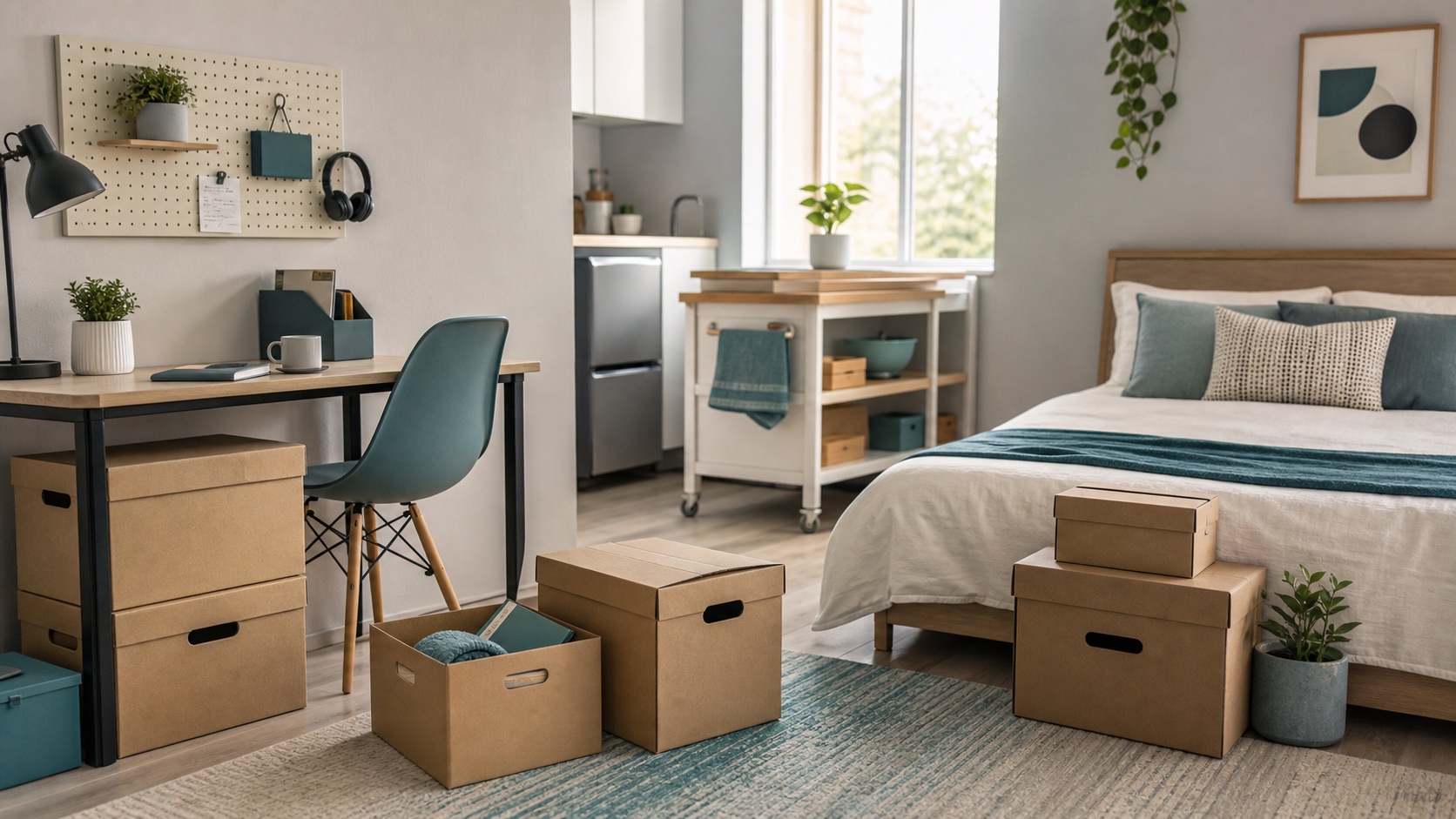
A studio sounds simple because there is only one main room, but the box count depends on how much function is packed into that room. One studio may be a bed, a table, and a few dishes. Another may include a full kitchen, deep closet, bookshelves, bike gear, work monitors, hobby supplies, and decor. That is why a useful studio estimate should be built from zones instead of room names.
For a moderate studio, plan around 20 to 35 boxes. A minimalist studio can come in below that. A full studio with a real kitchen, heavy books, and seasonal storage can land above it. The goal is to keep enough small boxes for dense items and avoid turning every remaining item into a random last-minute large box.
Studio box mix to start with
| Box type | Starting count | Use it for |
|---|---|---|
| Small | 7 to 12 | Books, pantry cans, desk items, tools, bathroom products. |
| Medium | 10 to 16 | Decor, folded clothes, small appliances, lampshades, bedding. |
| Large | 2 to 5 | Light bedding, pillows, bulky seasonal items. |
| Wardrobe | 0 to 2 | Hanging clothes if folding would create too much work. |
| Dish | 1 to 3 | Glassware, mugs, plates, fragile kitchen pieces. |
Pack the studio by zones
Start with the least-used zone, not the largest zone. In many studios that means books, seasonal clothes, decor, spare linens, hobby supplies, and extra kitchenware. Save daily kitchen tools, a small bathroom kit, chargers, medication, and one bedding setup for the open-first box. This keeps the apartment livable while packing progresses.
Label by destination even if the current apartment has one room. Use labels such as kitchen, closet, desk, bath, books, bedding, and first night. At the new place, these labels matter more than the old layout. If the new home has separate rooms, the labels keep a studio move from becoming a pile of mixed boxes.
Small-space packing tips
- Build one stack of empty boxes and one stack of finished boxes so the floor stays usable.
- Use suitcases for folded clothes, shoes, or linens before buying extra large boxes.
- Keep a donation bag open for duplicate kitchen items and old decor.
- Do not pack heavy books in medium or large boxes just because they fit.
- Finish the kitchen before the last day except for one plate, one mug, and basic cookware.
When to raise the estimate
Add more boxes if the studio has a storage locker, many books, a full cookware set, collectibles, framed art, or a work-from-home desk with accessories. Add more packing paper and dish boxes if the kitchen is real rather than occasional. Add wardrobe boxes only for clothes that must stay hanging, because folded clothes are usually easier to move in luggage or medium boxes.
Estimate your own box mix
Use the calculator to turn this guide into a printable box list with a low, normal, and high range for your home.
Open moving box calculator